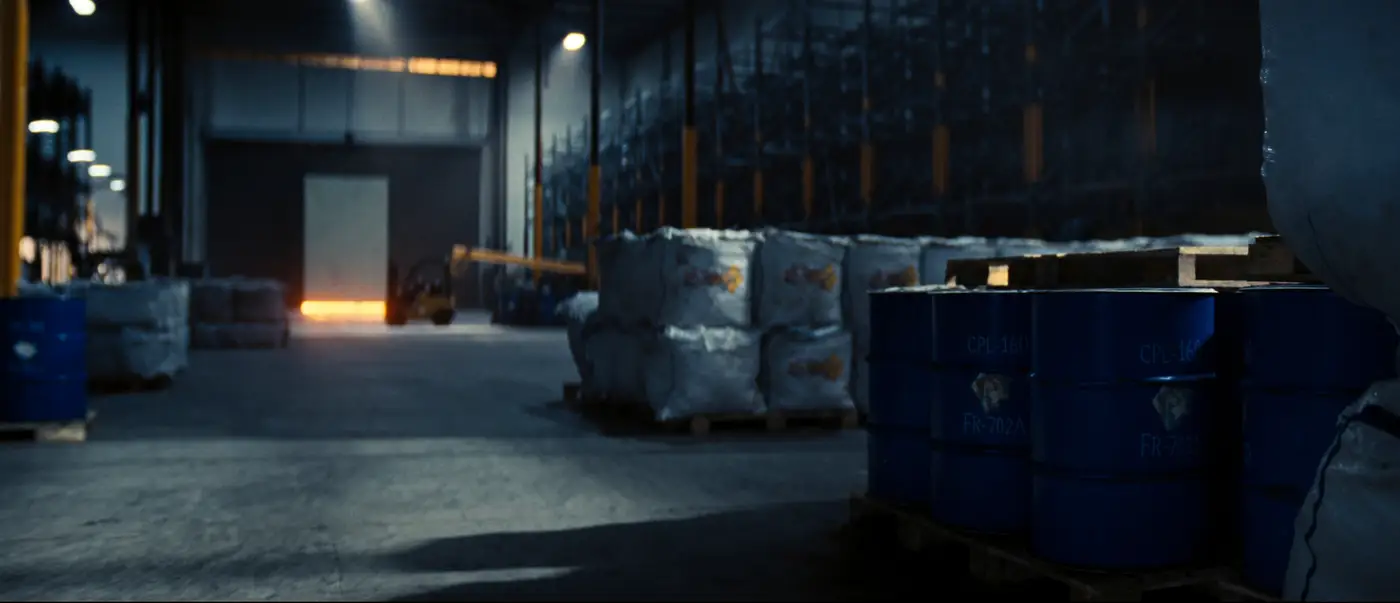
Acid Corrosion Inhibitors
Cationic corrosion inhibitors for HCl, HF, organic, and mud-acid systems used in matrix acidizing and acid fracturing. Wide service-temperature range from surface to 350°F+ bottom-hole.
Acid corrosion inhibitors, friction reducers, acid gelling agents, multi-functional polymers, and the balance chemistry that supports hydraulic fracturing and matrix acidizing. Every product ships with a lot-traceable Certificate of Analysis.
Stimulation additives are the chemicals blended into hydraulic fracturing fluids and acidizing treatments to control how those fluids behave downhole. Without them, raw water can't be pumped at design rate (no friction reducer), neat acid corrodes the tubulars (no inhibitor), and emulsions form during flowback (no surfactant), the treatment underperforms and the well doesn't produce to expectation.
A modern stimulation chemistry stack covers four functional groups: rate control (friction reducers, gelling agents, breakers), equipment protection (corrosion inhibitors, surfactants), formation preservation (clay stabilizers, iron control, scale inhibitors), and operational housekeeping (biocides, mud flushes). Each gets matched to the water source, the formation type, the temperature window, and the treatment design.
Our stimulation product line covers each of these functional groups with codes tested in-house and matched to the downhole conditions. Every shipment includes a lot-traceable Certificate of Analysis and the Technical Data Sheet (TDS) is downloadable directly from each product page.

Cationic corrosion inhibitors for HCl, HF, organic, and mud-acid systems used in matrix acidizing and acid fracturing. Wide service-temperature range from surface to 350°F+ bottom-hole.
Polymer-based friction reducers for hydraulic fracturing, anionic for fresh and low-salt water systems, cationic and amphoteric for high-salinity produced water and brines.
Polymer thickeners that build viscosity in acid systems, used for diverting acid stimulation, conductivity-channel fracturing, and improved zone coverage at depth.
Emulsion co-polymers that serve multiple roles in a single product, mud flush, friction reduction, and viscosity building for hydraulic fracturing pre-pad operations.
Acid surfactants and non-emulsifier formulations that prevent emulsion formation during acid spending, improve flowback, and reduce interfacial tension in the formation.
Iron-control chelants, scale inhibitors, and clay stabilizers, the balance chemistry stack for stimulation treatments that preserve formation conductivity and prevent precipitation.
ACI-130 is a corrosion inhibitor for HCl, HF, and mixed mineral acid systems used in matrix acidizing and acid fracturing. Effective across a wide temperature range with low load rates.
AI-260 is a corrosion inhibitor for HCl, HF, organic, and mud acid systems operating at temperatures up to 350°F. Cationic chemistry provides protection at low load rates.
FR-702A (also FR-40) is an anionic friction reducer for hydraulic fracturing in fresh water and low-salinity systems. Rapid hydration and high friction reduction performance.
GA-93C is a cationic crosslinked acid gelling agent for diverting acid stimulation treatments. Builds viscosity in acid systems for improved zone coverage and diversion control.
High-rate water-based pumping that fractures the formation. Friction reducers (anionic, cationic, amphoteric depending on water chemistry), gelling agents for proppant transport, biocides, scale inhibitors, and clay stabilizers.
Lower-rate acid placement to dissolve formation minerals or remove damage. Corrosion inhibitors, surfactants, iron control chelants, and gelling agents for diverting acid to under-stimulated intervals.
Higher-rate acid pumping that fractures carbonate formations. Combines stimulation chemistry classes | high-temp inhibitors, gelled-acid systems for conductivity, and corrosion control through extended contact time.
Tell us the code or class, same-business-day response with confirmed pricing, MOQ, and lead time. TDS downloadable on every product page.