
Lost Circulation Material · Proprietary

WELLSHIELD

LCM · WBM · OBM · Cement Slurry · Cement Spacer

WELLSHIELD is a proprietary Lost Circulation Material (LCM), a chemically inert blend of nitrile rubber, synthetic flakes, asphaltite, and other inert bridging materials with a carefully engineered wide particle size distribution. Compatible with water-based mud (WBM), oil-based mud (OBM), cement spacers, and cement slurries. High-temperature stable, low specific gravity, non-porous, non-permeable.
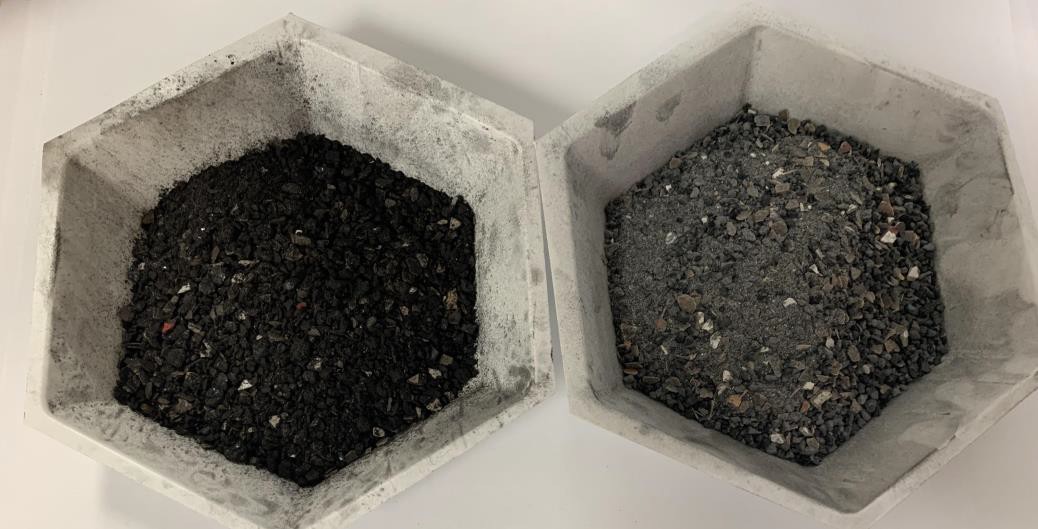
WELLSHIELD Lost Circulation Material, fine and coarse particle grades shown in inspection trays
Compatible with
WBM · OBM
PSD grades
Fine · Med · Coarse
What it is

A multi-component LCM for thermally demanding wellbores.

WELLSHIELD is the all-purpose Lost Circulation Material for restoring wellbore stability under thermally demanding downhole conditions. In contrast to conventional LCM products that fully melt at elevated temperatures, WELLSHIELD's high softening point allows the material to gradually soften and warp as it approaches its softening point, bridging the loss zone without catastrophic structural failure. The wide particle-size distribution (available in fine, medium, and coarse grades) means a single product covers a broad range of fracture aperture sizes, simplifying the field-treatment decision tree.

Base composition
  • ▸ Chemically inert nitrile rubber
  • ▸ Synthetic flakes
  • ▸ Asphaltite
  • ▸ Inert bridging material
Applications

Five downhole problems WELLSHIELD addresses.

One LCM across multiple fluid systems, fewer SKUs to inventory, simpler field decision tree, and a chemistry profile that stays predictable as conditions change downhole.

01

Lost Circulation Control

Bridges and seals fracture apertures across a wide range of widths thanks to the engineered wide particle size distribution. Reduces non-productive time during drilling and cementing operations.

02

Filtrate Loss Prevention

Non-porous, non-permeable bridging chemistry reduces filtrate invasion into the formation across both water- and oil-based fluid systems.

03

Wellbore Stability

Mechanical bridging at the wellbore wall stabilizes weak or fractured zones, particularly in shales and unconsolidated formations.

04

Gas Migration Control

Reduces annular gas migration in cement slurries during the critical transition period when cement is gelling but not yet fully set.

05

Weight Modification

Low specific gravity with water-requirement-insensitive weight modification | adjusts mud weight without dramatically altering rheology or hydration profile.

Specifications

Product spec.

Product type
Lost Circulation Material (LCM)
Base composition
Nitrile rubber · synthetic flakes · asphaltite · inert bridging material
Particle size distribution (PSD)
Fine · Medium · Coarse, PSD report on request
Thermal behavior
High softening point, gradual warping vs. complete melting
Specific gravity
Low
Porosity
Non-porous
Permeability
Non-permeable
Fluid compatibility
WBM · OBM · cement spacers · cement slurries
Chemical reactivity
Chemically inert
US distribution
Houston · Los Angeles · New Jersey
Treatment

Recommended loading rates.

  1. 01 · Cement spacers

    10–40 lb per barrel

    Adjust based on loss severity and formation aperture.

  2. 02 · Cement slurries

    6–12% BWOC (By Weight of Cement)

    Compatible with conventional cement systems and weighted slurries.

  3. 03 · Drilling fluids (WBM/OBM)

    10–40 lb per barrel

    Add through standard mixing hopper. Contact service advisor for severity-based loading.

Loading depends on loss severity and formation conditions. Contact your Xanero service advisor for severity-based guidance and a particle-size-distribution recommendation.

Why WELLSHIELD

Benefits in the field.

Operators that adopt WELLSHIELD typically replace 2–3 single-application LCMs with one product, simplifying logistics without losing capability.

  • 01

    Compatible across water-based muds, oil-based muds, cement spacers, and cement slurries, one product covers multiple fluid systems

  • 02

    Inert, high-temperature stable, performance-proven, and economical compared to specialty LCMs

  • 03

    Wide particle size distribution available in fine, medium, and coarse, simplifies field inventory

  • 04

    Low specific gravity allows weight modification without disrupting hydration profile

  • 05

    Non-porous, non-permeable bridging, reduces filtrate invasion alongside primary loss control

WELLSHIELD FAQ

What field engineers usually ask.

Don't see your question? Call directly, we respond personally, not a routing bot.
Q1 What is WELLSHIELD? +
WELLSHIELD is a proprietary Lost Circulation Material (LCM), a chemically inert blend of nitrile rubber, synthetic flakes, asphaltite, and inert bridging materials with a wide particle size distribution. It's used to control fluid loss and restore wellbore stability across drilling fluids, cement spacers, and cement slurries.
Q2 Is WELLSHIELD compatible with both water-based and oil-based mud systems? +
Yes. WELLSHIELD is compatible with both water-based mud (WBM) and oil-based mud (OBM) systems. It also works in cement spacers and cement slurries, making it a single-product solution across multiple fluid types that would otherwise require separate LCM inventories.
Q3 How does WELLSHIELD perform at high downhole temperatures? +
WELLSHIELD has a high softening point relative to conventional LCM products. Rather than melting completely at elevated temperatures, it gradually softens and warps as it approaches the softening point, maintaining bridging capability across thermally demanding wellbore conditions.
Q4 What particle sizes are available? +
WELLSHIELD is available in fine, medium, and coarse particle size distributions. PSD reports are available on request to match the expected fracture aperture range and treatment severity. Many operators stock multiple grades for field flexibility.
Q5 What's the recommended loading rate? +
Treatment depends on application and loss severity. Typical loading: 10–40 lb per barrel in cement spacers and drilling fluids; 6–12% BWOC (By Weight of Cement) in cement slurries. Contact your Xanero service advisor for severity-based loading guidance.
Q6 Is WELLSHIELD chemically reactive with other additives in the slurry? +
No. WELLSHIELD is chemically inert. It does not react with cement, common mud additives, or formation fluids, which means it can be added to existing systems without compatibility concerns or retrograde chemistry effects.
Q7 Where is WELLSHIELD distributed from in the US? +
WELLSHIELD ships FOB from Xanero USA's Houston, TX, Los Angeles, CA, and New Jersey points, with LTL/FTL shipping nationwide. US-domiciled invoicing in USD against domestic delivery.
Q8 How does WELLSHIELD compare to other LCM products? +
Unlike products with low softening points that fully melt at high temperatures, WELLSHIELD's high softening point allows gradual softening and warping, maintaining bridging structure as temperature rises. The chemically inert, multi-component blend also gives broader fluid-system compatibility than single-material LCMs (calcium carbonate, mica, cellulose, etc.).
Request a Quote

Pricing on WELLSHIELD, same business day.

For: WELLSHIELD LCM
  • ▸Producer-confirmed pricing, MOQ, lead time
  • ▸COA, TDS, and SDS documentation included
  • ▸Real people answer, not a routing bot

By submitting you agree to Xanero USA contacting you about this inquiry. We never sell your data.

Sourcing LCM?

Pricing on WELLSHIELD, quoted same business day.

Fine, medium, and coarse grades available. PSD report on request. US-domiciled invoicing. LTL/FTL FOB Houston, TX, Los Angeles, CA, or New Jersey.